


8.07.2019
In modern conditions, professional education in the Ministry of Internal Affairs is also subject to very high requirements, as it is necessary to prepare specialists for activities in a dynamic, rapidly changing world, where the police officer is constantly faced with non-standard tasks, the solution of which involves the presence of skills and abilities that allow to effectively and quickly solve them. That is, a police officer of the «new format» should have not only a theoretical knowledge base, but also a sufficient set of professional competencies in various spheres of life, ranging from psychological preparedness to first aid skills.
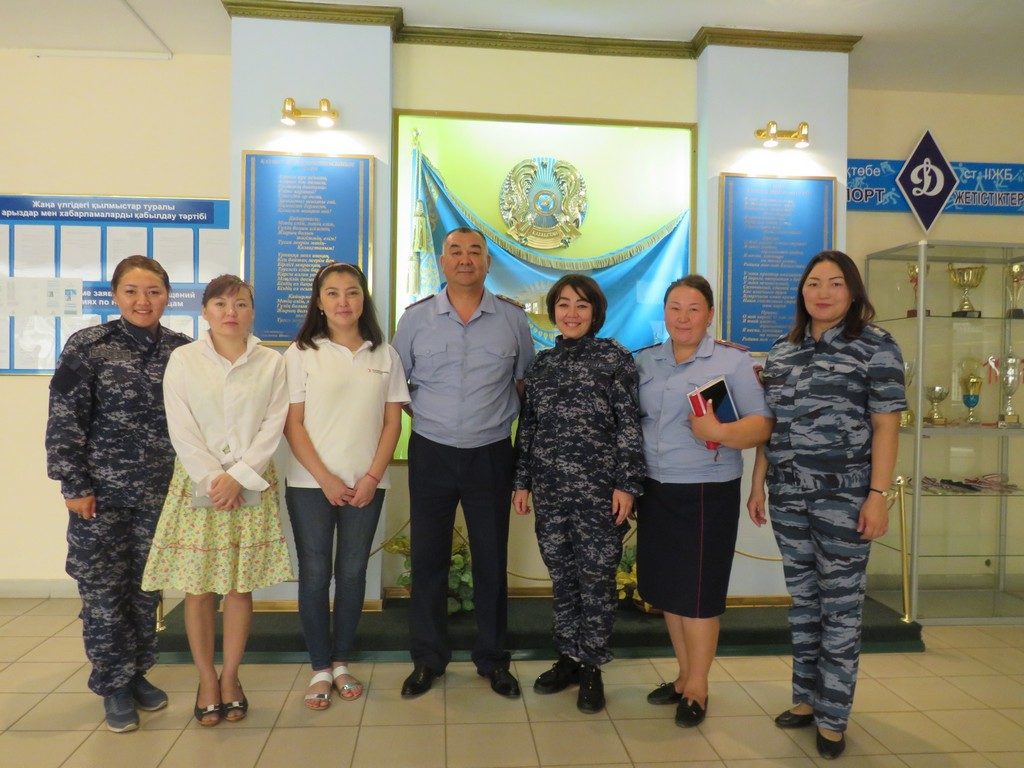
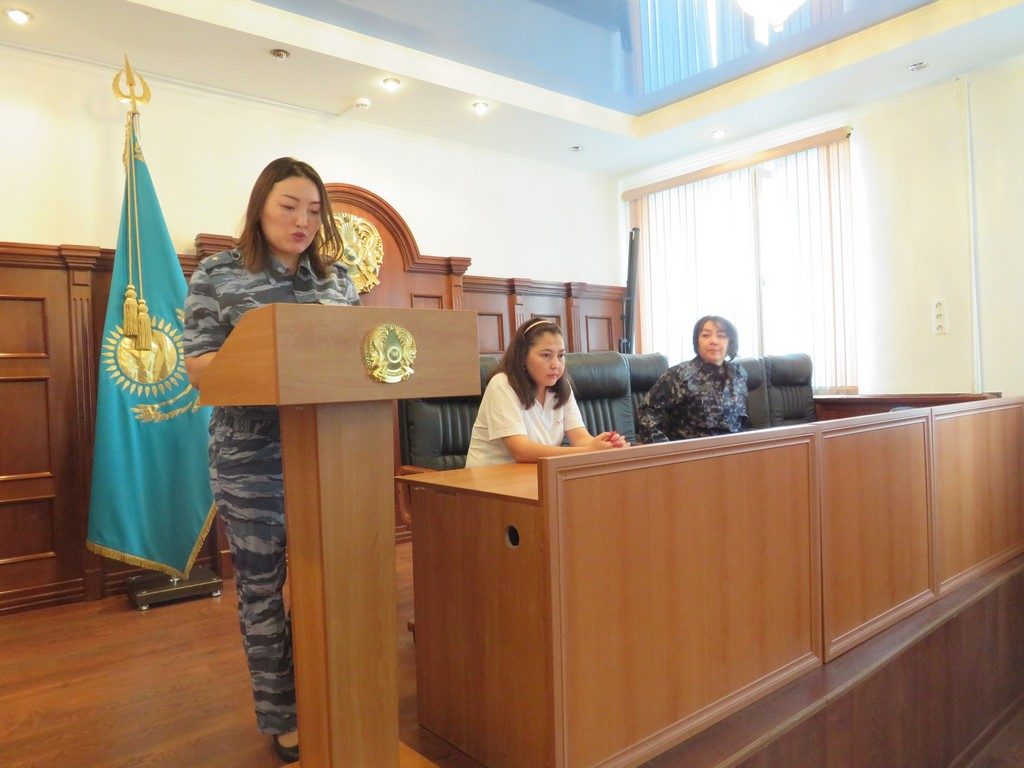
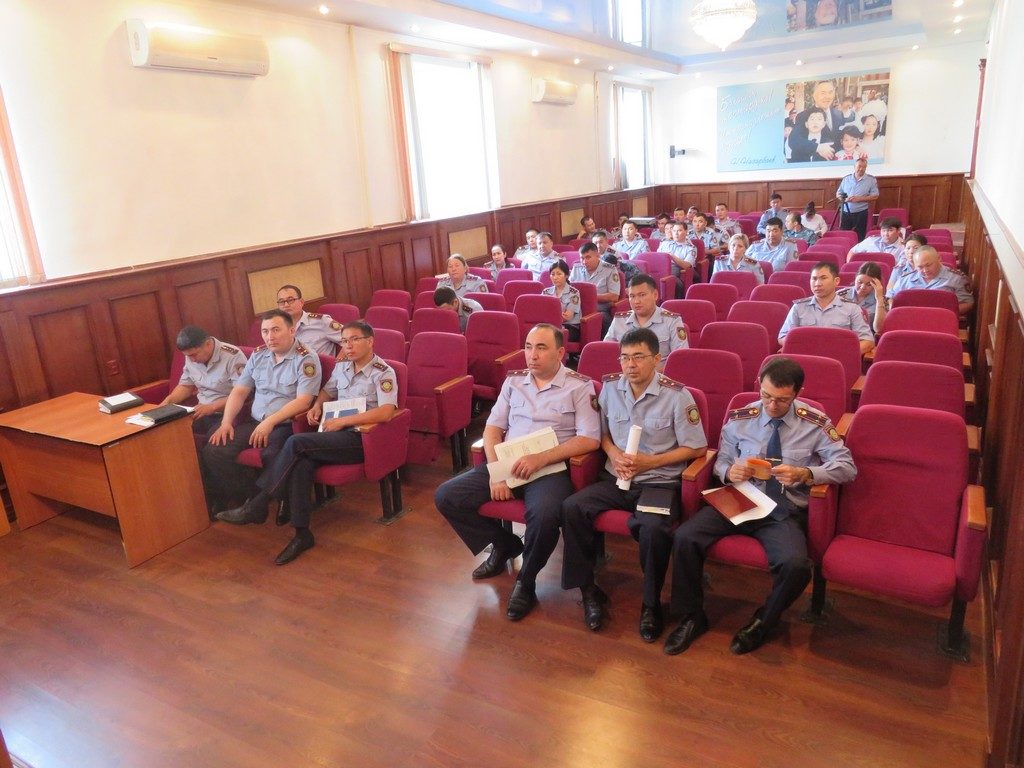
Thus, on June 6, 2019 as part of the implementation of the new concept of the Ministry of Internal Affairs of the Republic of Kazakhstan on the transition of police officers to a new format of training and reorientation of the educational process to a practical focus in the LPD at the Aktobe station of the Police Department on transport with the support of the head of the Aktobe law Institute of the Ministry of Internal Affairs of the Republic of Kazakhstan named after M. Bukenbaev, a practical lesson «Tactical and special training» was organized for the staff of the line Department at the Aktobe station, namely, providing pre-medical and psychological assistance. The class was conducted by a staff member of the Aktobe regional branch of the red Crescent Society specialist instructor in first aid Tazhibaeva Zamzagul Aupovna, head of the Department of criminal process and criminalistics, police Lieutenant Colonel Sakhanova Nelly Talapovna, senior lecturer at the Department of General subjects, police Major Zhukaeva Zhaynagul Aisultanovna and lecturer of the Department of criminal process and criminalistics, police Major Mukhangaliyeva Zarina Amangeldiyevna. In conditions as close to reality, with the use of acting, with the imitation of panic and shock in the victims, models for ventilation, instructors were demonstrated techniques of providing pre-hospital medical care for various types of bleeding,fractures, dislocations, sprains, burns, asphyxia, frostbite, poisoning, heat and sunstroke, electric shock, immobilization rules and transportation of victims, as well as methods and techniques of resuscitation (artificial respiration, indirect heart massage). In the course of the training, officers showed keen interest and curiosity, asked a lot of clarifying questions, and also actively participated both as assistants and in demonstrating the known methods of first aid to the victims. At the end of the session, the students thanked the guests and expressed their wishes to conduct similar practice-oriented situational classes in the future. As police officers of the new generation and «new» format should be able to organize their work in conditions of uncertainty and increased risk, requiring independence and competence in decision-making.
Lecturer of CPaC
police Major
Z.A.Mukhangalieva